
The Protein Craze
Protein is all the rage.
No longer reserved for the bodybuilding crowd, protein is mainstream, and it’s a booming $15 billion industry. Food companies are adding protein to even the most unlikely foods, including cereal, cookies, chips, pretzels, popcorn, pastries, coffee, candy, and even bottled water. Even if the added protein provides only a small amount of protein, the price can range anywhere from 12% higher to double the price of the standard food.
Protein is an essential nutrient and a vital building block of every cell. It fuels muscles and supports bones, immunity, and hormones. We get protein in our diet from animal and plant sources. Protein from animal sources is more bioavailable than protein from plant sources, meaning the body uses it more easily.
Protein from plant sources is lower in saturated fat than protein from animal sources and provides fiber. Getting your protein from red meat and processed meats is not the best option, as both are high in saturated fat, and processed meats contain cancer-causing compounds.
| Animal Sources of Protein | Plant Sources of Protein |
|
|
The new USDA Dietary Guidelines released this year increased the recommendation for protein from 0.8 grams per kilogram of body weight to 1.2–1.6 grams of protein per kilogram of body weight. That is equivalent to about 80–110 grams of protein per day for the average 150-pound adult.
Most nutrition experts agree that the majority of Americans were probably getting enough protein before the new guidelines were implemented and that getting more protein is not necessarily better. For most older adults, aiming for 20–30 grams of protein at each meal, three times per day, is sufficient to meet protein needs.
Just because an ultra-processed food, like chips or candy, has protein added to it does not automatically make it healthy. And it is not necessary to have protein in every food you eat.
Healthy ways to increase protein:
- Eat plain Greek yogurt: Greek yogurt has more protein than traditional yogurt and tastes delicious with fresh or frozen fruit on top.
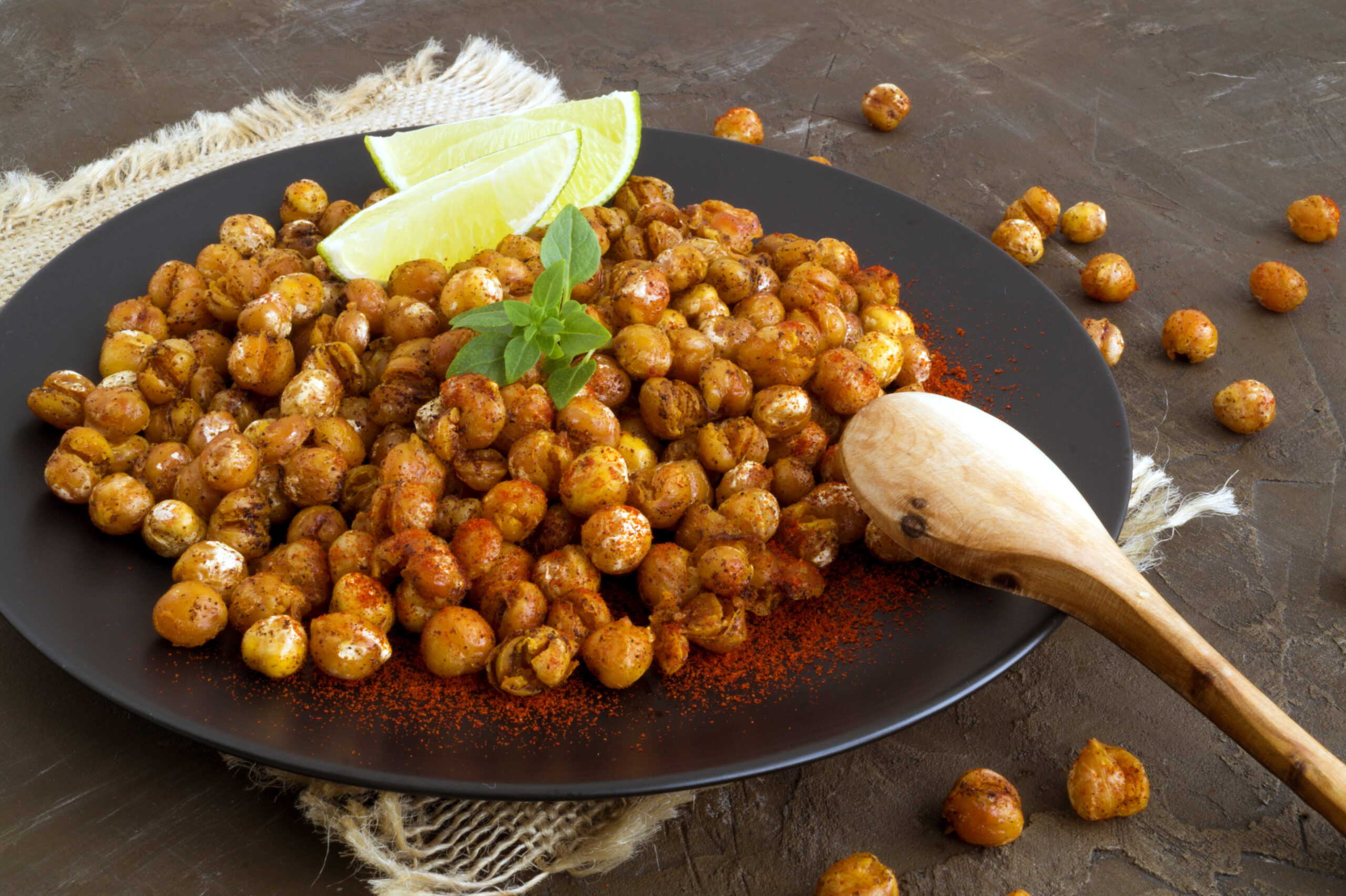
- Snack on string cheese, edamame, roasted chickpeas, a hard-boiled egg, or lean beef or turkey jerky.
- Try more plant-based proteins like beans, lentils, tofu, edamame, and quinoa for your main course.
- Top your salad or yogurt with nuts or seeds.
- Add cottage cheese as a side dish, on top of a salad, or with fruit as a snack.
Try this delicious, crunchy plant-based protein snack.
Roasted Chickpeas
Adapted from loveandlemons.com
Ingredients
- 1½ c cooked chickpeas (1 can), drained and rinsed
- Extra virgin olive oil for drizzling
- Sea salt to taste
- Paprika, curry powder, garlic powder, or other spices to taste
Directions
- Preheat the oven to 425°F and line a large baking sheet with parchment paper.
- Spread the chickpeas on a kitchen towel and pat them dry. Remove any loose skins.
- Transfer the dried chickpeas to the baking sheet and toss them with a drizzle of olive oil and pinches of salt.
- Roast the chickpeas for 20 to 30 minutes, or until golden brown and crisp. Ovens can vary. If your chickpeas are not crispy enough, keep going until they are!
- Remove from the oven and, while the chickpeas are still warm, toss with pinches of paprika, curry powder, or other spices, if using.
- Store roasted chickpeas in a loosely covered container at room temperature. They are best used within two days.

Related Posts